

TheDocumentation Index
Fetch the complete documentation index at: https://walletconnect-pay-docs-docs-merchant-api-logo-spec.mintlify.app/llms.txt
Use this file to discover all available pages before exploring further.
iconUrl field on the Merchant API accepts a public HTTPS URL pointing to a merchant logo. The logo renders at the moment of payment, so dimensions and format are a direct trust signal — a stretched or pixelated logo undermines buyer confidence at the exact step where confidence matters most.
This guide covers the recommended specification for the iconUrl field used by POST /v1/merchants (create) and PATCH /v1/merchants/{merchantId} (update).
Where the logo appears
The merchant logo is surfaced at the two main moments of the buyer’s payment flow:Wallet payment screen
When the buyer scans the WalletConnect QR code, the wallet opens a payment screen with the merchant logo as the primary visual anchor above the amount and selected payment method.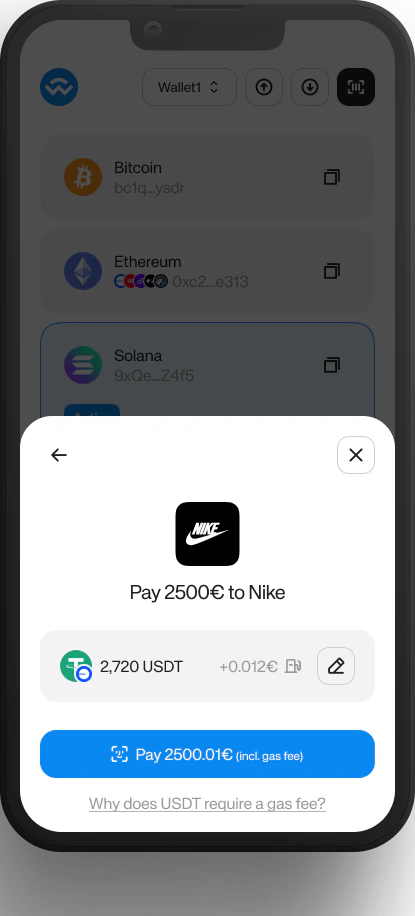
Buyer checkout
On the WalletConnect Pay buyer checkout page — opened when a buyer scans the payment QR with a generic camera or QR scanner — the merchant logo anchors the “Pay X to <Merchant>” headline above the payment options.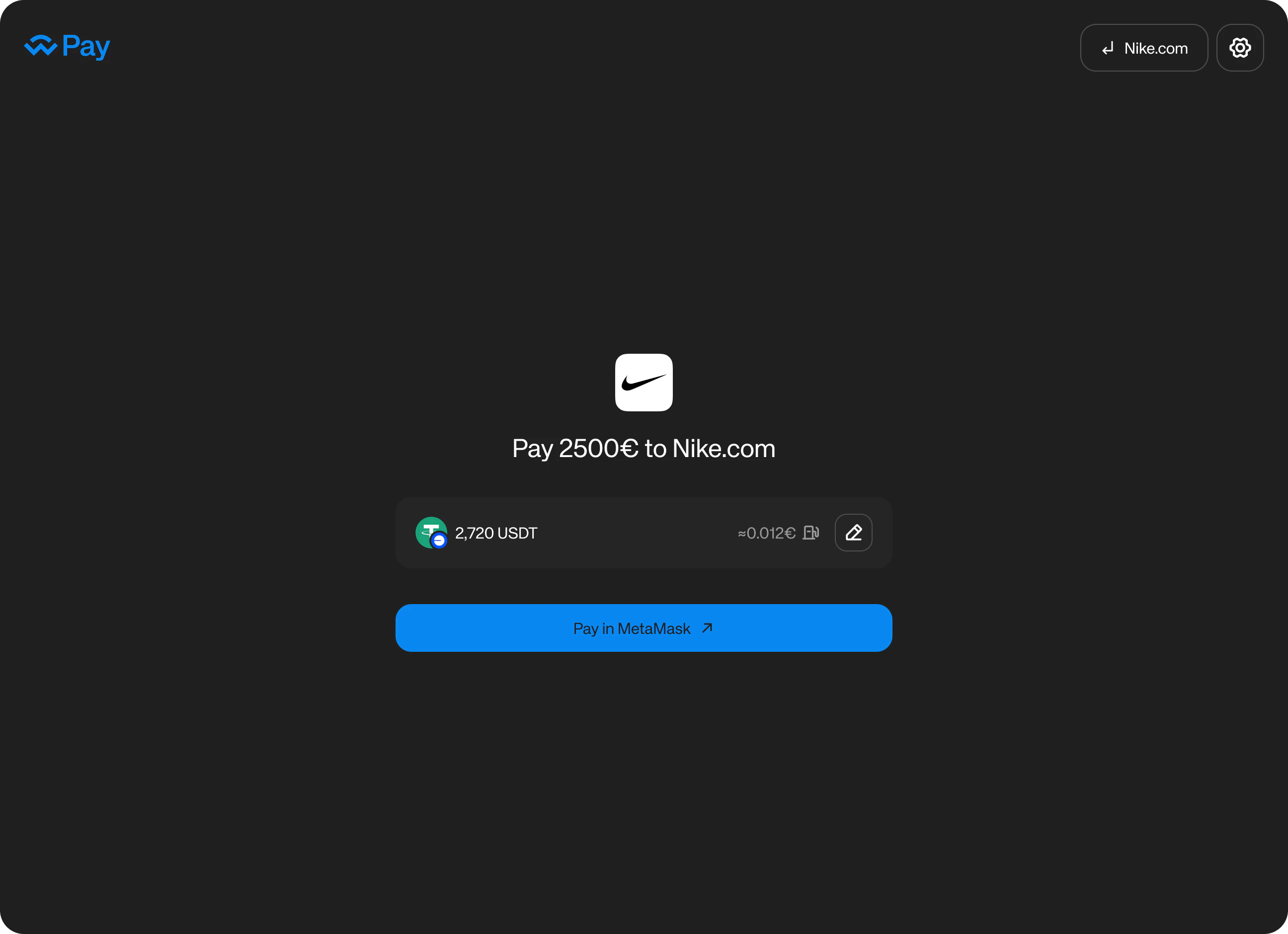
Specification
| Field | Value |
|---|---|
| Aspect ratio | 1:1 (square) — tolerance ±5% |
| Minimum dimensions | 500 × 500 px |
| Recommended dimensions | 1024 × 1024 px |
| Maximum dimensions | 4096 × 4096 px |
| Accepted formats | JPEG, PNG, WebP, AVIF |
| Max file size | 2 MB |
| Transparency | Allowed in PNG and WebP |
Format guidance
- PNG or WebP for logos with transparent backgrounds.
- JPEG for flat photographic logos with no transparency.
- AVIF if your asset pipeline already produces it; otherwise prefer PNG.
- 1024 × 1024 px is the recommended size: it gives retina headroom across surfaces while staying well under the 2 MB cap.
Why square
Logos render inside square and rounded-square containers across surfaces. Non-square images get center-cropped, and the result is unpredictable — a tall rectangle that looks fine in one wallet may have its bottom half clipped in another. Square assets with the ±5% tolerance render consistently everywhere.Worked example
Create a merchant with a logo hosted on your own CDN:PATCH /v1/merchants/{merchantId} with a new iconUrl — simply swapping the asset at your CDN URL will not update what buyers see at checkout.